Benefit in kind on electric company cars: the 2026 HR and fleet guide
)
Benefit in kind (BiK) is the tax an employee pays on the private use of a company car, and in 2026 it is the single strongest financial reason to put electric vehicles on your fleet. Across the UK, Netherlands, Belgium, Germany and France, EVs are taxed at a small fraction of the rate applied to petrol or diesel equivalents.
This guide gives HR, comp and ben, CFOs and fleet managers the 2026 country-by-country picture, a worked example, the home-charging detail that catches payroll out, and a short checklist to act on.
Why benefit in kind now works in your favour on EVs
For a company car driver, BiK is the value added to taxable income for the privilege of private use. The higher the taxable benefit, the more income tax the employee loses and the more employer social charges the company pays on top.
Historically this made company cars an expensive perk. Electric vehicles have flipped that logic: because BiK scales with CO2 emissions in most European systems, a zero-emission car lands at or near the lowest possible band.
In the UK an EV is taxed at 4% of list price in 2026/27, against roughly 25% to 37% for a comparable combustion car. That gap is not marginal, it changes take-home pay by thousands of euros or pounds a year, which is why HR and fleet teams are using EVs to upgrade the car offer without raising cost.
It also feeds directly into the total cost of ownership case for electrifying a fleet.
2026 benefit in kind, country by country
BiK is set nationally and the rules diverge sharply, so the same electric car is taxed five different ways across these markets. The table below summarises the confirmed 2026 treatment for fully electric company cars.
For the wider incentive picture beyond BiK, our country hub on tax advantages across Europe covers grants, deductibility and registration taxes alongside these figures.
Country | 2026 BiK treatment for EVs |
|---|---|
United Kingdom | Flat 4% of list price for 2026/27 (up from 3%), against roughly 25% to 37% for petrol or diesel. The rate rises one point a year to 5% in 2027/28 and 9% by 2029/30. Electricity for charging is not treated as car fuel, so it carries no separate fuel benefit. |
Netherlands | Bijtelling of 18% on the first €30,000 of catalogue value and 22% on the part above it. The rate is locked for 60 months from first registration. It rises to 20% in 2027 and to the standard 22% from 2028. |
Belgium | Fixed benefit of catalogue value × 6/7 × 4% × age coefficient. EVs keep the minimum 4% rate because they sit outside the CO2 mechanism, with an indexed annual floor (around €1,690 expected for 2026). Cars ordered in 2026 stay 100% deductible for the employer. |
Germany | 0.25% of the gross list price per month for battery-electric cars up to €100,000 (raised from €70,000 in mid-2025), and 0.5% above that. From January 2026, only actual metered home-charging electricity can be reimbursed tax-free; the old tax-free flat rates are gone. |
France | Benefit in kind (avantage en nature) reduced by a 70% abatement for eligible EVs, capped at €4,641.60 per year, which keeps the taxable amount among the most generous in Europe. |
The home-charging detail HR and payroll keep missing
BiK covers the car. Charging the car at the employee's home is a separate question, and it is where policies go wrong.
The good news is that in most of these systems the electricity supplied for a company EV is not an extra taxable benefit in the employee's hands: the UK explicitly does not treat electricity as fuel, and reimbursing an employee for home charging of a company car is exempt. The catch is on the employer side.
To stay tax-free, the reimbursement has to reflect real consumption, not a round-number allowance. Germany made this explicit from January 2026 by ending tax-free flat rates and requiring proof of the electricity actually charged.
The UK points employers to an Advisory Electricity Rate of 7p per mile for home charging, and anything paid above real cost becomes taxable and reportable. The pattern across Europe is the same: reimburse the actual kWh cost, keep the evidence, and the benefit stays clean.
Our guide to home charging reimbursement goes into the mechanics.
A worked example: one EV, three tax outcomes
Take a £45,000 electric saloon in the UK. At the 4% rate, the taxable benefit is £1,800.
A 40% taxpayer pays £720 a year in income tax on it. Put the same driver in a £45,000 diesel taxed at 33% and the benefit jumps to £14,850, costing about £5,940 in tax, more than eight times as much.
The employer feels it too: Class 1A National Insurance (around 15% in 2026) is charged on the same benefit, so the EV costs the company roughly £270 a year against about £2,228 for the diesel. Now change the driver's country.
That £45,000 car in the Netherlands is taxed on catalogue value at 18% up to €30,000 and 22% above, while in Belgium it follows the 6/7 × 4% formula. The car is identical; the outcome depends entirely on where the driver files tax, which is exactly why a single group-wide BiK assumption breaks down.
What HR, comp and ben and fleet managers should do now
A few concrete moves turn these rules into a defensible policy rather than a surprise on the payslip.
- Map each driver to their country of taxation before you build the car policy: the same EV is taxed five different ways across the UK, Netherlands, Belgium, Germany and France.
- Mind registration timing where the rate is frozen: the Dutch 60-month lock means the year a car is registered fixes its bijtelling for five years.
- Separate the car benefit from the charging benefit in payroll: they follow different rules and mixing them is how employers create accidental taxable pay.
- Brief drivers before they order, not after: a £720 versus £5,940 annual gap changes which car people choose and how they feel about the offer.
- Keep evidence of actual electricity cost per driver: mandatory in Germany from 2026 and the safe default everywhere else.
- Tie the BiK policy to your total cost of ownership model, not just the headline lease price, so finance sees the full picture.
Once BiK is optimised, the reimbursement question remains
Optimising benefit in kind is the visible half of the job. The invisible half happens every evening when your drivers plug in at home and pay for the electricity out of their own pocket.
Reimbursing that fairly, at actual cost, with records that survive a payroll or tax audit, is where fleets quietly lose control, especially once drivers span several countries with different proof requirements. This is the problem Voltaback solves in software: it tracks each home-charging session by vehicle and reimburses the exact kWh cost, producing compliant monthly records, with no hardware to buy and nothing to configure on the driver's existing setup.
The approach is backed by a formal URSSAF ruling in France, measured by Bureau Veritas with a 1.22% average relative error, and already runs across 180+ companies including more than 15% of the CAC 40, among them Equans, BNP Paribas, Lyreco and Sodexo. Book a demo to see how it fits your fleet.
FAQ
For 2026/27 the BiK rate on a fully electric company car is 4% of the list price, up from 3% the year before. It rises by one percentage point a year, reaching 5% in 2027/28 and 9% by 2029/30, but still sits far below the 25% to 37% applied to petrol and diesel cars.
Generally the electricity itself is not an extra taxable benefit. The UK does not treat electricity as car fuel, and reimbursing an employee for home charging of a company car is exempt. The condition is that you reimburse the real cost: Germany requires metered proof from 2026, and paying above actual cost turns the excess into taxable pay.
There is no single winner because the systems work differently. The UK's 4% rate and Belgium's fixed 4% formula are among the lowest headline treatments, while France applies a 70% abatement capped at €4,641.60. The right answer depends on the car's value and where each driver is taxed.
It depends on the country. The Netherlands locks the bijtelling rate for 60 months from registration, so the year you register matters. The UK rate, by contrast, rises each tax year regardless of when the car was ordered. Always check the national rule before committing to a long lease.
Plug-in hybrids are taxed less favourably than battery-electric cars because they still emit CO2, which places them in higher BiK bands in most of these countries. For the lowest benefit charge, a fully electric car is almost always the better choice for a company fleet in 2026.
Reimburse the actual electricity cost per driver, identified by vehicle, and keep the supporting records. Flat allowances are now disallowed tax-free in Germany and risky elsewhere. Software such as Voltaback captures each session at actual cost and produces compliant monthly statements without any hardware.
Written by Aubin Aycaguer, Chief of Staff at Voltaback. Voltaback is the software platform that tracks and reimburses home charging for company EV fleets at actual cost, with audit-ready compliant records and no hardware to buy.
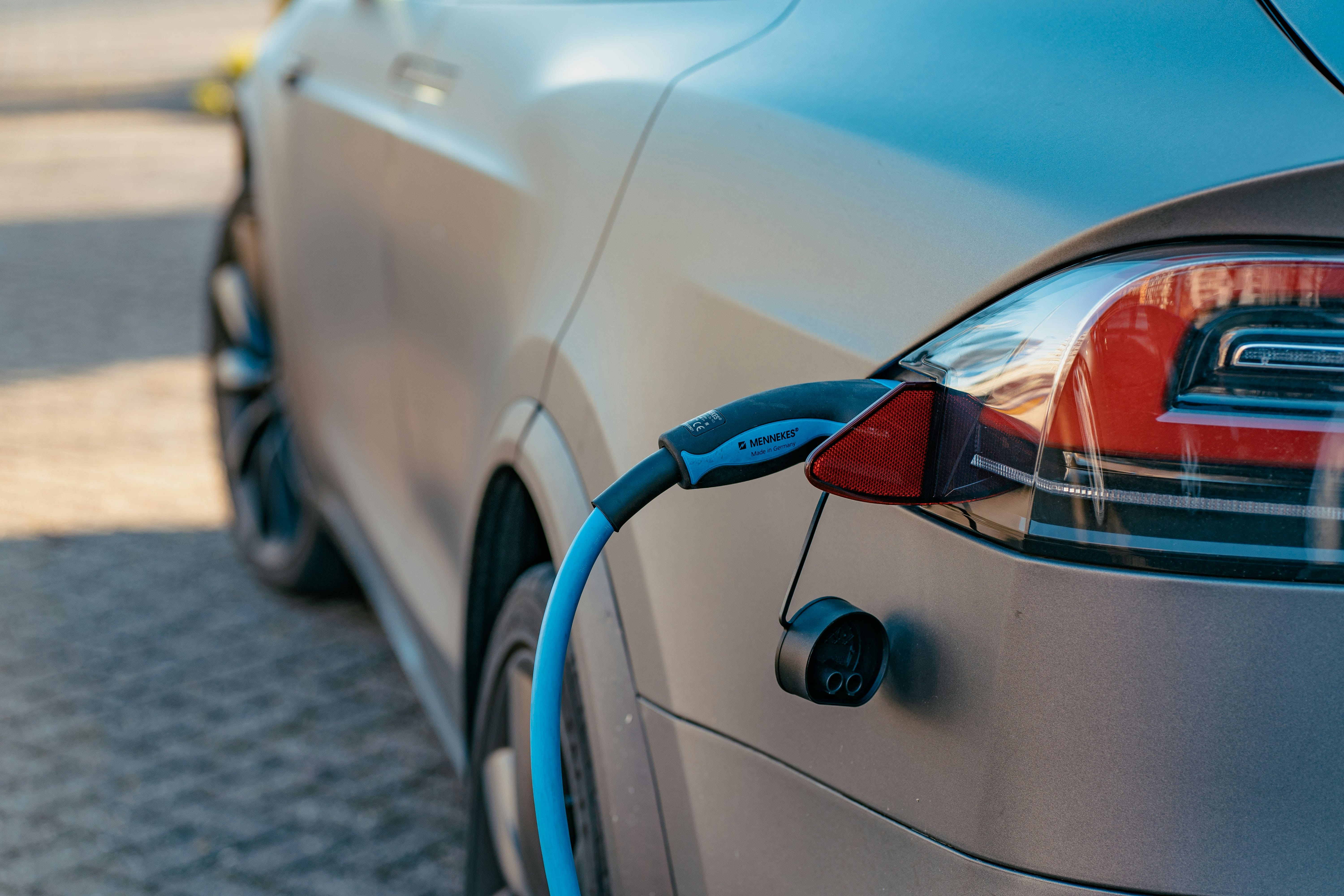
Company
How to reimburse employees for home charging of company EVs: the 2026 compliance guide
How to reimburse employees for home charging of company EVs, compliantly. Flat-rate vs actual cost, the records you need, and the real home vs public saving.

Company
Flat-rate vs actual-cost reimbursement for EV home charging in 2026
Flat-rate or actual-cost reimbursement for EV home charging? Compare cost, tax risk and fairness, with a worked example for CFOs and fleet teams in 2026.
Company
Leasing vs buying electric company cars in 2026: how to actually control the cost
Leasing vs buying electric company cars in 2026: how residual value, mileage, tax and holding period decide the cheaper choice for your fleet.