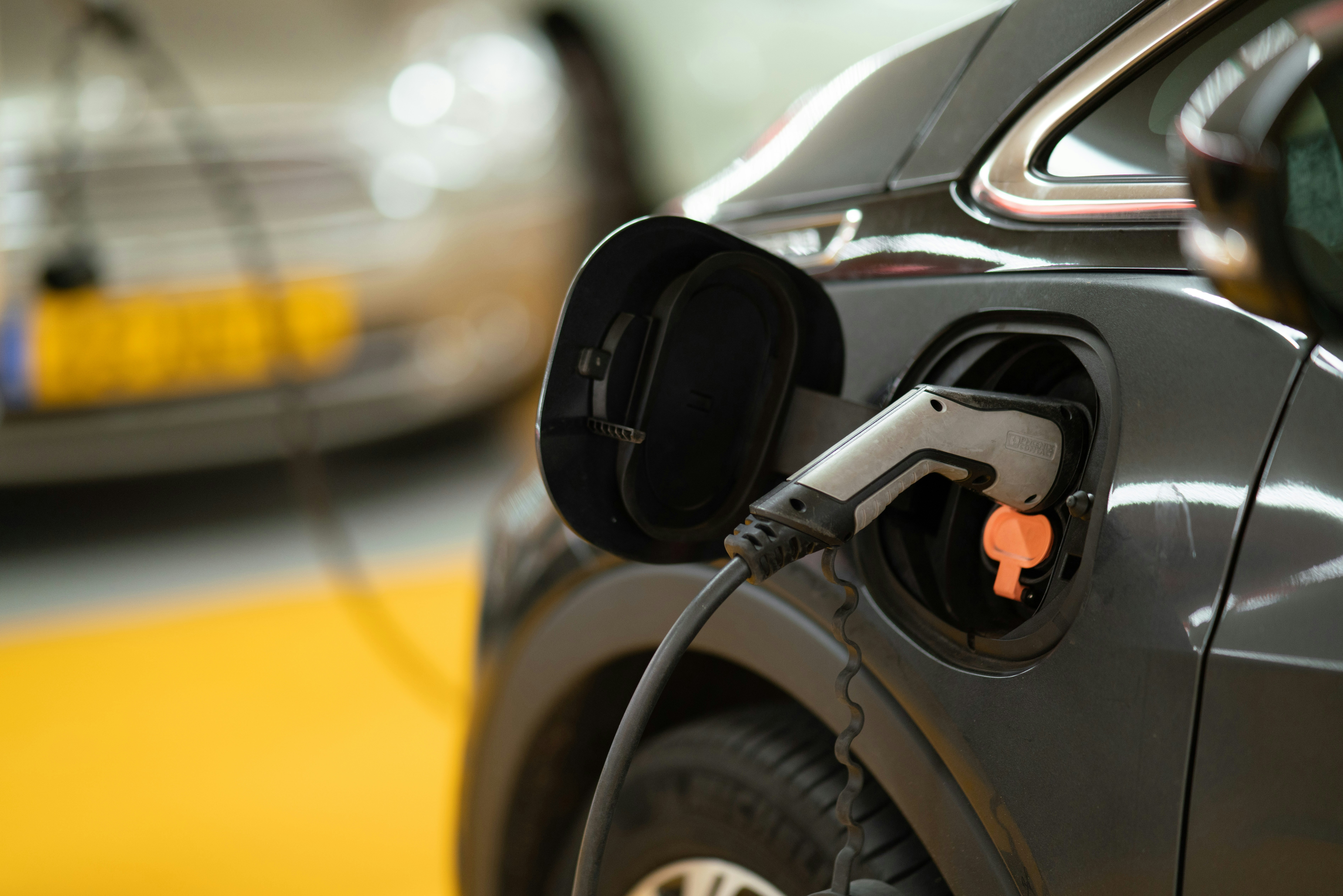
EV charging infrastructure for fleets: home, workplace and public in 2026
)
A fleet does not run on one charging network, it runs on three: home (drivers charging where they park overnight), workplace or depot (vehicles returning to a base), and public (top-ups on the road). Home is by far the cheapest kWh, roughly 2 to 3 times less than public fast charging in Western Europe.
The winning 2026 strategy is not to build the most infrastructure, it is to push as much energy as possible onto the cheapest layer, home, and buy hardware only where a duty cycle genuinely requires it. This guide is for European fleet managers, CFOs and mobility managers deciding where to spend.
The three charging layers, in one view
Every fleet charging decision maps to one of three layers. Home covers drivers who take their vehicle home and plug into their own supply overnight.
Workplace or depot covers vehicles that return to a site each day and charge on infrastructure you own. Public covers everything else: fast charging on long routes and opportunistic top-ups.
Most fleets need a mix, weighted by how their vehicles actually dwell. The table below is the frame the rest of this guide builds on.
Charging layer | Typical cost / kWh | Hardware you buy | Best for |
|---|---|---|---|
Home | €0.10 to €0.30 (EU home average around €0.29) | None for the fleet, the driver already has an outlet | Drivers who park at home overnight, distributed teams, sales and service fleets |
Workplace / depot | €0.10 to €0.20 with a contracted or self-generated tariff | €3,500 to €8,000 per Level 2 (22 kW) point; €18,000 to €55,000+ per 50 kW DC point [TO CONFIRM per site] | Vehicles that return to a single base daily with a long overnight dwell |
Public (AC/DC) | AC €0.30 to €0.50; DC median around €0.54, from €0.38 up to €0.82 in the UK | None, you pay per use | Long routes, high daily mileage, drivers with no home or depot option |
Figures are 2026 European ranges and vary by country, tariff and time of day. Treat depot hardware costs as indicative before grid-connection work, which can add materially to a DC project.
Where the money really is: home is the cheapest kWh
If you only optimise one thing, optimise this. Home charging in Europe runs about €0.10 to €0.30 per kWh, against a public DC fast-charging median near €0.54, and up to €0.82 in the UK.
That is the well-documented 2 to 3 times gap. For a CFO, the maths is blunt: a car doing 25,000 km a year uses roughly 4,000 kWh.
Move that energy from public DC to home and you save on the order of €1,000 to €1,500 per vehicle per year, before any hardware. Across a fleet of 100 vehicles that is a six-figure line the infrastructure debate usually ignores.
The strategic question is therefore not "which chargers do we install", it is "how do we get the maximum share of kWh onto the home layer". More on the numbers in our guide to the total cost of ownership of an electric fleet.
Do you actually need hardware for every layer?
No, and this is where budgets get wasted. Two of the three layers require no capital from the fleet at all.
Public charging is pay-per-use. Home charging happens on an outlet the driver already owns, on any installation, with or without a smart meter, in a flat or a house, even with solar panels.
The only layer that genuinely demands hardware is workplace or depot, and only for vehicles whose duty cycle needs it: Level 2 (7 to 22 kW) is enough for anything with a long overnight dwell, while DC fast charging (50 kW and up) is justified only when the charging window is short or utilisation is very high. A common and expensive mistake is to default to a depot buildout for vehicles that already sit at a driver's home every night.
Before signing a hardware quote, ask where each vehicle actually parks. Many fleets discover the answer is "at home", which is precisely the home-charging blind spot that quietly inflates electrification budgets.
)
How to balance home, workplace and public
Balance the three layers by duty cycle, not by preference. Start from where each vehicle sleeps and how far it drives, then assign the cheapest layer that fits.
- Drivers who take the vehicle home (sales, service, field teams): default to the home layer. It is the cheapest kWh and needs no capital. The task here is measurement and reimbursement, not hardware.
- Vehicles based at a single depot (last-mile, pooled cars, utilities): Level 2 overnight at the depot is the low-cost base case. Reserve DC for the minority of vehicles with short turnaround windows.
- High-mileage or long-route vehicles: public fast charging is unavoidable and that is fine, just cap its share because it is the most expensive kWh. Use it as a top-up, not the primary source.
- Mixed fleets (most real fleets): run all three, then track the split. A healthy 2026 target is the majority of energy on home and depot, with public as the exception. Smart charging management on the depot layer can cut electricity cost by up to 40% by shifting load to off-peak windows.
- The governance rule: you cannot balance what you cannot see. Whichever mix you choose, you need per-vehicle energy and cost data across all three layers, or the split silently drifts toward the expensive one.
The total-cost picture: infrastructure is a line item, not the whole bill
Infrastructure is the second-biggest barrier to fleet electrification after vehicle cost, which is exactly why it gets over-scoped. But hardware is a one-off capital line, while energy is a recurring cost for the life of every vehicle.
Over a typical contract, the kWh you buy will dwarf the chargers you install. That reframes the whole decision: a strategy that spends heavily on depot DC to avoid "dealing with" home charging can be more expensive over five years than a lighter hardware footprint that leans on the home layer.
The two costs to model together are the capital of any workplace or depot points and the blended cost per kWh across your three layers. Optimise the second and the first often shrinks, because you stop buying chargers for vehicles that could charge at home.
The one operational cost people forget in this picture is reimbursing that home energy accurately, which is a data and compliance task rather than a hardware one, and where fleets most often either overpay with flat allowances or underpay and frustrate drivers. Our guide to home charging reimbursement covers how to get it to the cent.
The home layer without the hardware
The hardest layer to run well is not depot or public, it is home, because the energy sits inside your drivers' personal electricity bills. That is the layer Voltaback covers, in software.
Voltaback measures each home charge per vehicle (date, duration, kWh, cost), reimburses at actual cost to the cent rather than a flat allowance, and generates a compliant monthly justification, on any installation, with or without a smart meter, in a flat or a house, even with solar. There is nothing to buy per vehicle and nothing to configure on the driver's outlet, so the cheapest kWh in your fleet finally becomes measurable and reimbursable.
The reimbursement method is backed by a URSSAF ruling and its metering accuracy has been independently verified by Bureau Veritas with a 1.22% average relative error. More than 180 companies use it, including over 15% of the CAC 40, among them Equans, BNP Paribas, Lyreco and Sodexo.
If you want to see how the home layer looks when it is fully tracked and reimbursed, book a demo.
FAQ
Home, clearly. It runs about €0.10 to €0.30 per kWh in Europe, against a public DC median near €0.54, so roughly 2 to 3 times cheaper. Depot Level 2 on a contracted tariff can be similarly low, but it requires capital that home charging does not.
No. Public charging is pay-per-use and home charging uses an outlet the driver already has. Hardware is only justified at a workplace or depot for vehicles whose duty cycle needs it. Check where each vehicle actually parks overnight before scoping a buildout.
Only when charging windows are short (roughly 1 to 4 hours) or utilisation is very high. A 50 kW DC point runs €18,000 to €55,000 and up before grid work, versus €3,500 to €8,000 for a Level 2 point that covers any long overnight dwell.
By duty cycle. Put drivers who go home on the home layer, depot-based vehicles on overnight Level 2, and reserve public for high-mileage or long-route cases. Aim to keep the majority of kWh on home and depot, and track the split so it does not drift to expensive public charging.
Reimbursing home energy accurately. Flat allowances overpay some drivers and underpay others, and they are hard to justify for tax and social-charge purposes. The fix is per-vehicle metering and actual-cost reimbursement, which is a data and compliance task, not a hardware one.
No. Voltaback covers the home-charging layer in software: it measures and reimburses home charging per vehicle at actual cost, on any installation, with no hardware to install. Your workplace, depot and public charging stay exactly as they are.
Written by Aubin Aycaguer, Chief of Staff at Voltaback. I work with European fleet managers, CFOs and mobility managers on the layer of charging that is hardest to see and cheapest to run: home. If you want to know how much your fleet is leaving on the table by not tracking it, book a demo.