Greening your company fleet: a practical 2026 decarbonisation roadmap
)
Greening a company fleet means cutting its emissions on a planned, budgeted timeline rather than replacing every vehicle at once. The reliable path is five steps: audit what you run today, set a dated target, electrify segment by segment, sort out charging (including at drivers' homes), then measure and report.
This guide is for fleet managers, sustainability and ESG leads, and CFOs who need a roadmap they can actually defend to a board. The step most roadmaps get wrong is charging: home charging is where the savings are, and where the accounting quietly falls apart if you ignore it.
Why green your company fleet now, not in 2030
Because the deadlines are already inside your replacement cycle. Under the EU CO2 standards, new cars must average 49.5 g CO2/km by 2030 (a 55% cut versus 2021) and vans 90.6 g/km (a 50% cut), tightening toward near-zero by 2035.
On top of that, the Commission's proposed Clean Corporate Vehicles Regulation would set binding zero-emission targets specifically for large corporate fleets from 2030, currently under review by Parliament and Council in 2026 [proposal, not yet adopted]. Corporate fleets are the lever: they make up roughly 60% of new car registrations in Europe, drive about twice the mileage of private cars, and cycle back into the used market within three to five years.
The financial case is just as immediate. Electric vehicles usually win on running cost once you look at the full picture rather than the sticker price, which is why the total cost of ownership matters more than list price.
And ESG reporting now has teeth: fleet emissions sit in your Scope 1 (owned vehicles) and Scope 3 (grey fleet, employee cars), and they are among the easiest line items for auditors, clients and investors to check. Waiting does not make any of this cheaper.
For the numbers behind the switch, see the full business case for fleet electrification.
The 5-step decarbonisation roadmap
A fleet is not greened by a single decision but by a sequence, each step de-risking the next. Audit before you target, target before you buy, and settle charging before drivers take delivery. The table below is the backbone. The sections after it go deeper on the two steps teams most often underestimate: phasing and charging.
Step | Goal | Key action |
|---|---|---|
1. Audit | Know what you run and what it emits | Pull mileage, fuel spend, CO2 and duty cycle per vehicle; map who charges where |
2. Set the target | A dated, board-approved commitment | Fix a % zero-emission by year (e.g. 50% by 2028, aligned to EU 2030), tied to renewal dates |
3. Electrify by segment | Switch the vehicles that convert cleanly first | Start with predictable, home-parked cars; keep ICE where range or payload still demands it |
4. Charging strategy | Make sure every EV can charge cheaply and be accounted for | Prioritise home and depot charging; set a way to track and reimburse home kWh at actual cost |
5. Measure & report | Prove the roadmap works | Track cost per km, tonnes CO2 avoided, ZEV share; feed it into ESG reporting |
Step 3 in depth: how to phase electrification by segment
Phase by duty cycle, not by badge. The cleanest early wins are vehicles with predictable daily distance and a place to charge overnight, because they deliver the running-cost savings without operational risk. Sequence roughly like this:
- Company cars for home-based drivers (electrify first). Predictable commutes, overnight home charging, strong tax treatment in most EU markets. This is where TCO turns positive fastest.
- Urban and last-mile vans (electrify next). Fixed routes, return-to-depot every night, low daily mileage. Depot charging covers them and city low-emission zones reward them.
- Regional / high-mileage vehicles (electrify selectively). Viable where routes and charging stops are known; otherwise pair a smaller EV pilot with existing ICE until range and charging density catch up.
- Heavy, long-haul or specialist vehicles (keep under review). Battery-electric options are maturing unevenly by use case [TO CONFIRM per vehicle class]; hold, and revisit at each renewal rather than forcing an early swap.
Tie each phase to natural renewal dates. You rarely need to scrap a working vehicle early; you need to make sure the next one that leaves the fleet is replaced by the right zero-emission model. That keeps capital spend smooth and the target credible.
)
The mistake that breaks most roadmaps: the home-charging blind spot
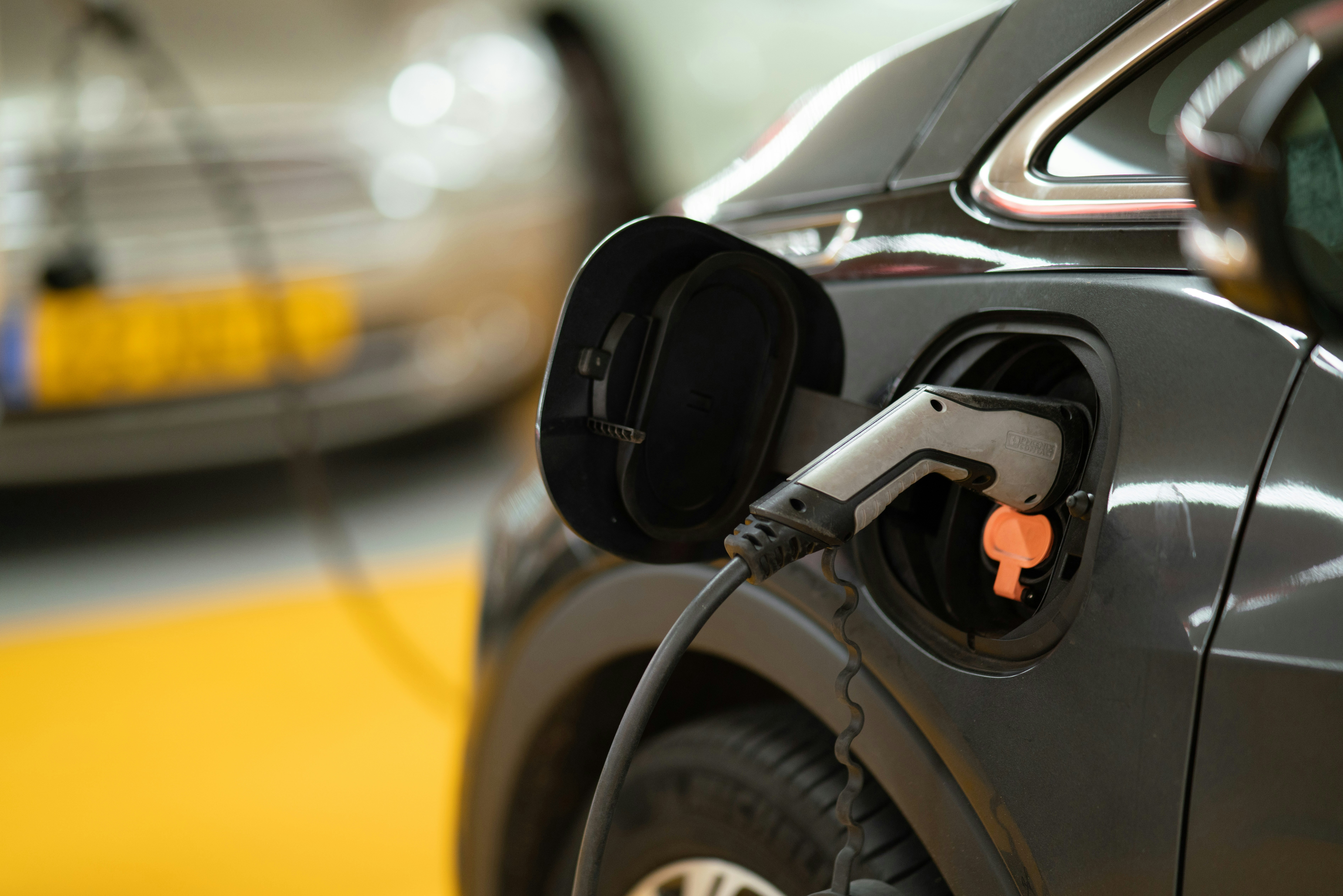
Once drivers go electric, most of their charging happens at home, and that is exactly where roadmaps lose control of the numbers. Home charging is typically two to three times cheaper than public fast charging, so it is the single biggest saving in an electrified fleet.
But if you cannot see it, you cannot reimburse it fairly, and you cannot count it. Companies that skip this end up either overpaying through crude flat allowances or pushing drivers toward expensive public chargers, quietly cancelling the savings that justified the switch.
That is the home charging blind spot, and it belongs in step 4, not as an afterthought.
The fix is not more hardware. You do not need to install a charger at every employee's home to solve this; you need to enable and reimburse the home charging drivers already do, precisely and compliantly.
That is what Voltaback does in software: it tracks each home charging session per vehicle (date, duration, kWh, cost) and reimburses at the real, actual cost rather than a flat forecast, on any existing installation, in a flat or a house, with or without solar. Reimbursement is audit-ready, backed by an official URSSAF ruling in France, and the metering accuracy has been verified by Bureau Veritas with a 1.22% average relative error.
More than 180 companies use it, including over 15% of the CAC 40 such as Equans, BNP Paribas, Lyreco and Sodexo. It settles the one line of the roadmap that spreadsheets cannot.
The metrics to track and report to your board
A roadmap you cannot measure is a wish. Track a small, honest set of numbers from day one, so every quarter shows movement and every claim survives an audit:
- Zero-emission share (%) of the fleet, and of new orders, against your dated target.
- Tonnes of CO2 avoided, calculated from real mileage and energy use, not manufacturer averages.
- Cost per kilometre by powertrain, so the TCO case is visible rather than asserted.
- Charging split home vs depot vs public, since a rising public share is an early warning that costs are leaking.
- Home kWh reimbursed at actual cost, which doubles as a fairness and compliance record for URSSAF-style scrutiny.
- Renewal alignment, the share of expiring leases replaced by a ZEV, the metric that keeps the plan on schedule.
These six feed straight into ESG and financial reporting. They also give you the early signals to correct course before a target slips out of reach.
What greening a company fleet realistically costs and takes
Plan in cycles, not calendar years. Most fleets green over one full renewal cycle of roughly three to five years, because that is how quickly vehicles naturally turn over.
The audit and target-setting can be done in weeks; the heavy lifting is disciplined replacement at each renewal date. Upfront acquisition can be higher for some EVs [varies by segment and market], but the running-cost gap usually closes the total cost within the holding period once home charging is priced correctly, which is exactly why step 4 is not optional.
Budget for the roadmap as a rolling programme with quarterly checkpoints, not a one-off project, and the board conversation shifts from cost to controlled transition. If you want to see how the charging and reimbursement piece works on a real fleet, book a demo.
FAQ
It means reducing your fleet's emissions on a planned timeline, usually by shifting to zero-emission vehicles segment by segment as vehicles renew, then measuring and reporting the reduction. It is a programme across a renewal cycle, not a single purchase.
EU CO2 standards already force manufacturers toward near-zero new cars and vans by 2035. On top of that, the proposed Clean Corporate Vehicles Regulation would set binding zero-emission targets for large corporate fleets from 2030, currently under review in 2026. So the direction is fixed, even where the exact fleet obligation is still being finalised.
Typically one full renewal cycle, around three to five years, because vehicles turn over at that pace. The audit and target-setting take weeks; the rest is replacing each expiring vehicle with the right zero-emission model on schedule.
Home charging. It is where most charging happens and where the savings live, but if you cannot track it per vehicle you tend to overpay through flat allowances or lose savings to public charging. Reimbursing home charging at actual cost protects the whole business case.
No. You can enable and reimburse the home charging drivers already do without imposing any hardware. Software like Voltaback tracks each session and reimburses the real cost on whatever installation the driver has, so you avoid buying and managing equipment per vehicle.
Written by Aubin Aycaguer, Chief of Staff at Voltaback. Voltaback is a 100% software platform that tracks and reimburses home charging for company EV fleets at actual cost, with no hardware, so the greenest, cheapest kilowatt-hours in your fleet finally get counted.
Operator
Home charging: the overlooked blind spot of fleet electrification (2026)
Home charging is where most fleet EV energy is delivered, yet it stays invisible on the balance sheet. Here is how to close the blind spot in 2026.
Operator
EV charging infrastructure for fleets: home, workplace and public in 2026
How fleets combine home, workplace and public charging in 2026: what each layer costs per kWh, where the money really is, and how much hardware you need.