Home chargers for fleet drivers: should your company fund a smart charger per driver?
Smart charger, smart cable or car data: costs on 50 drivers, tax by country (BE, NL, DE, LU, IT, UK), flats and renters, and when a charger is worth it.
Aubin Aycaguer, Chief of Staff, Voltaback4 Nov 2026

Funding a smart home charger for every company car driver is one way to measure and reimburse home charging, but it is rarely the cheapest or the most complete. A charger counts the kWh it delivers; it does not know the driver's tariff, it cannot follow a driver who moves, and in many European homes (flats, rented houses, on-street parking) it cannot be installed at all. Software that reads charging data from the car itself measures the same sessions on any setup.
This guide is for fleet managers, reward teams and finance directors of companies with drivers in several European countries. It explains what a smart charger really does, compares the three ways to measure home charging, sets out the tax and grid rules country by country (Belgium, the Netherlands, Germany, Luxembourg, Italy, Spain, Portugal and the UK), runs the numbers on 50 drivers in euros, and says when a charger per driver remains the right call. Voltaback, which reimburses home charging for more than 200 companies including major European groups, works with any charger or plug; the comparison below is written so you can apply it whatever tool you choose.
What a smart home charger does
A smart home charger is a wallbox connected to the internet, by Wi-Fi, Ethernet or a 4G module. Compared with a basic charger or a domestic socket, it can:
- Meter the kWh it delivers, session by session, sometimes with a built-in MID-certified meter;
- Schedule charging at off-peak hours, or follow a dynamic tariff;
- Balance the load of the house, reducing power when the oven and heat pump are running, so the main fuse does not trip;
- Follow solar production, charging from the surplus of rooftop panels;
- Report to a back-office through the OCPP protocol, so an employer, a lessor or a charging operator can see and steer the sessions;
- Identify the user with an RFID badge, when several cars share the same charger.
Only the first and the last functions matter for reimbursement. Scheduling, load balancing and solar mode are useful to the driver and the grid, but they do not tell finance what to pay. That distinction is the core of the decision: you may want drivers to have a good charger, without needing that charger to be your data source.
What "smart" means in law, country by country
There is no single EU definition of a smart home charger. The Alternative Fuels Infrastructure Regulation (AFIR, Regulation (EU) 2023/1804) sets rules for publicly accessible charge points, such as ad hoc card payment and price display; a private wallbox at a driver's home is outside its scope. National rules fill the gap:
Country | What applies to a home charger in 2026 |
|---|---|
Germany | A charger above 4.2 kW commissioned since 1 January 2024 is a controllable device under § 14a EnWG: the grid operator may reduce its power (never below 4.2 kW) at times of congestion, in exchange for lower grid fees. Every charger must be notified to the grid operator, and above 12 kVA approved in advance. |
Belgium | Inspection of the new circuit by an approved body under the electrical code (AREI/RGIE) before use. In Flanders, the capacity tariff charges the household's monthly peak, so load balancing saves money. |
Netherlands | No smart obligation, but grid congestion makes smart charging and load balancing increasingly valued by grid operators and lessors. |
Luxembourg | The private charger subsidy for 2026 to 2030 favours smart and ISO 15118-20 chargers; from 2027, only ISO 15118-20 chargers are planned to qualify. A charger above 7 kW three-phase is notified to Creos. |
UK | Chargers sold for home and workplace use must be smart by law since 30 June 2022 (Smart Charge Points Regulations 2021): connectivity, default off-peak charging, security standards. |
Sources: Bundesnetzagentur, § 14a EnWG, § 19 NAV, guichet.lu, private charging stations 2026, Smart Charge Points Regulations 2021.
So across Europe, the real question is rarely "smart or not". It is: who pays for the charger, which brand, who owns it when the driver leaves, and who sees the data.
Why fleets want measured home charging
A company car that charges at home uses the driver's electricity contract. The employer has to pay back the part used by the company car, and only that part. Three needs follow:
- Reimbursement at the right amount: every European country expects the employer to repay the company car's kWh, not the household's. Some allow a flat rate (Belgium's CREG rate, Germany's Strompreispauschale of 0.34 € per kWh in 2026, the UK's Advisory Electricity Rate per mile), others require the real cost (the Netherlands). Our guide to EV charging expense claims details the evidence each method needs.
- Accounting and VAT: finance needs a figure per vehicle and per month to book the expense and, where the rules allow it, handle VAT correctly.
- CO2 and CSRD reporting: energy per vehicle feeds scope 1 and 2 reporting far better than mileage multiplied by an average consumption.
A charger is one way to obtain that measurement. It is not the only one, and in a cross-border fleet it is often the least uniform, because the installed base differs from one country to the next.
Smart charger, smart cable or software: the comparison
There are three ways to measure home charging for a fleet. Each has a different cost profile and a different blind spot.
Criteria | Smart charger + back-office | Smart charging cable | Software reading car data |
|---|---|---|---|
What is measured | kWh at the charger's output | kWh at the cable's output | Each charging session of the company car |
Hardware per driver | Charger and installation | Cable, plus a suitable socket | None |
Typical cost per driver | 1,000 to 3,000 € installed | A few hundred euros, plus the socket if missing | No hardware |
Driver's tariff | Unknown, entered separately | Unknown, entered separately | Applied per driver, per period |
Other cars on the same charger | Mixed in, unless RFID is used | Mixed in if shared | Only the company car is counted |
Flats, renters, on-street | Often impossible | Possible with an outdoor socket | Works on any setup |
Charging away from home | Not seen | Seen if the cable is used | Distinguishes home and away |
Driver moves or leaves | Charger stays at the old address | Cable to recover | Reassigned in the software |
Deployment | Weeks: survey, quote, install, inspection | Days: shipping | Minutes per driver |
Where the measurement is taken
Where the measurement is taken matters more than most buyers expect. There are four possible points:
- The home meter records everything the house draws, and it is what the driver pays for.
- A charger or a cable measures energy at its own output, slightly less than the meter records because of cable and electronics losses.
- The car often reports the energy that reaches the battery, after charging losses of a few percent, more on a slow socket in winter.
- The supplier's bill gives a price, but not which kWh were for the car.
Using battery data alone would underpay the driver. Using the charger's output alone ignores the price. A sound method combines a session-level quantity for the company car with the price the driver really pays, losses included.
Voltaback relies on the home's MID-certified meter, not on a standalone cable meter. It combines the car's charging data with the home supply so each session is valued as the driver actually paid it, losses included. The measurement has been audited by an independent third party at a 1.22 % relative error. If you are considering cables specifically, see our comparison of the best connected charging cables.
The tariff problem
A charger knows kWh, not euros. Somebody has to enter each driver's price, and keep it current. In practice:
- Single-rate variable contracts change price a few times a year; the figure in the portal falls behind.
- Dual-rate contracts (day and night) are often entered as an average, which overpays drivers who charge at night.
- Dynamic contracts, common in the Netherlands, Belgium and the Nordic countries, change price every hour or quarter-hour; an annual average says little about the hour the car actually charged.
- Solar panels lower the real cost of a share of the kWh, which a fixed price ignores.
In Belgium, many fleets that cannot document the tariff default to the CREG flat rate, a ceiling rather than a typical price: 36.88 c€ per kWh in Brussels in Q4 2026, against about 0.24 € per kWh for night charging on a dual-rate contract. Source: CREG. On 50 cars charging 2,500 kWh a year each, the gap between the two prices is about 16,000 € a year.
Tax: who pays for the charger at the driver's home
The tax treatment of an employer-funded home charger differs from one country to the next. This table covers the most common case, a charger for a company car.
Country | Charger at the driver's home, funded by the employer, for a company car | Home electricity reimbursed |
|---|---|---|
Belgium | No extra benefit in kind: the flat-rate company car benefit already covers it; the company deducts 100 % of a charger bought until 31 December 2029, 75 % from 2030 | Real cost of the contract, or the quarterly CREG flat rate |
Netherlands | Not treated as wages when the charger serves the company car; covered by the bijtelling | Real cost per kWh only, tax-free |
Germany | Lent by the employer: tax-free (§ 3 no. 46 EStG). Given or subsidised: flat 25 % wage tax possible (§ 40 (2) EStG) | Tax-free as expense reimbursement (§ 3 no. 50 EStG): contract price, or 0.34 € per kWh in 2026 |
Luxembourg | Bought by the company: in principle not eligible for the private charger subsidy | Real cost; benefit in kind of the car is a flat percentage |
Italy | A wallbox paid by the company and left with the employee can be a taxable fringe benefit (Agenzia delle Entrate, answer 421/2023) | Reimbursement of the documented kWh |
Spain | Individuals may claim a 15 % income tax deduction for a home charger until 31 December 2026; company funding follows general payroll rules | Reimbursement of the documented kWh |
UK | No taxable benefit for a company car; for the employee's own car, a benefit based on cost | Advisory Electricity Rate per business mile, or actual cost |
Sources: Belgian deduction rules (Vlaanderen.be), Kennisgroepen Belastingdienst, BMF letter of 11 November 2025, Agenzia delle Entrate, answer 421/2023, Spanish income tax law (BOE), HMRC EIM23900.
Three points stand out for a multi-country fleet:
- Ownership decides the tax in Germany and Italy. A charger the company keeps and lends is treated differently from a charger it gives away. Write the ownership rule into the car policy before the first order.
- VAT follows the invoice. If the electricity is billed to the driver, the company generally cannot recover VAT on it, charger or not. A connected charger does not change that.
- Grants usually target households, not companies. The Luxembourg subsidy, the German programme for apartment buildings and the UK grant for flats and renters are paid to residents, landlords or owners' associations. A company buying chargers for drivers rarely qualifies. The national schemes for business charge points are compared in our guide to EV charger grants for businesses.
The tax is rarely the obstacle. The policy questions are harder: who owns the charger, what happens when the driver leaves or moves, who pays for removal, and what a driver who already has a charger receives instead.
When a charger is impossible or pointless
A charger per driver assumes every driver has a private, off-street space and the right to drill into a wall. Across Europe, a large share of company car drivers do not.
Flats and apartment buildings
In a flat, the driver needs the agreement of the owners' association or the building manager, and the cable route from the meter to the parking space can be long and costly. The recast Energy Performance of Buildings Directive (EU) 2024/1275 asks member states to introduce a "right to plug", so that owners and tenants can install a charger unless there are serious and legitimate grounds to refuse; several countries had such rules before the directive. The process and the country rules are covered in our guide to charging rights in apartment buildings.
Even with a right to plug, the timeline is months, not weeks: a request to the association, a technical study, sometimes a vote, then the works.
Renters
A tenant needs the landlord's written consent in most countries, and the charger usually stays behind when the driver moves. For a company that funded it, that is a sunk cost every time a driver relocates.
On-street parking
No wallbox is possible. Some cities in the Netherlands and Belgium install public charge points on request for residents with an EV and no driveway; in the UK, a cross-pavement channel may be allowed with council approval. In each case, the driver charges on a public point, at public prices, which the reimbursement scheme has to cover too.
Old installations and no smart meter
In older houses, a 7 kW charger may require a new circuit, a larger main fuse or a higher contracted power, which raises the fixed part of the bill every month. A domestic socket on a dedicated circuit is often enough for a company car that covers 50 to 80 km a day. Measurement does not need a smart meter either; see charging without a smart meter.
Drivers who already have a charger
In many fleets, a third or more of the drivers already own a charger, bought with a previous car or by a partner. Replacing it with the fleet's model only to collect data costs a full installation and gives the driver nothing.
A reimbursement scheme tied to one charger model leaves all these drivers out, or forces a second process for them. A scheme based on car data covers them with the same rules.
Worked example: 50 company cars in euros
Assumptions, to adapt to your fleet:
- 50 electric company cars across several European countries;
- 35 drivers already have a suitable charger or a dedicated socket; 15 have nothing suitable;
- a connected wallbox with MID meter costs 2,000 € installed, a mid-range figure for Belgium and Germany (Dutch and Italian prices are somewhat lower, Luxembourg higher);
- a back-office subscription of about 10 € per charger per month, a typical figure among Dutch lessors;
- 15 % of drivers move or leave each year, so the charger has to be removed or replaced;
- removal of an old charger: about 300 €;
- internal coordination: about 3 hours per installation at 50 € an hour;
- software subscriptions are counted without price, because they vary by provider.
Option A: a fleet charger for every driver
Item | Calculation | Amount over 4 years |
|---|---|---|
Initial chargers and installation | 50 × 2,000 € | 100,000 € |
Back-office | 50 × 10 € × 48 months | 24,000 € |
New installations after moves and leavers | 15 × 2,000 € | 30,000 € |
Removal at old addresses | 15 × 300 € | 4,500 € |
Coordination | 65 installations × 3 h × 50 € | 9,750 € |
Total | 168,250 € | |
Per driver per year | 168,250 € ÷ 50 ÷ 4 | about 841 € |
Option B: software measurement, charger only where missing
Item | Calculation | Amount over 4 years |
|---|---|---|
Chargers for drivers who have none | 15 × 2,000 € | 30,000 € |
Replacement after moves, only where needed | about 5 × 2,000 € | 10,000 € |
Coordination | 20 installations × 3 h × 50 € | 3,000 € |
Back-office per charger | none required | 0 € |
Software subscription | per vehicle, per offer | not included |
Total hardware and coordination | about 43,000 € |
The gap is about 125,000 € over four years, or about 31,000 € a year, before the software subscription of option B. It comes from three places: not replacing the 35 chargers that drivers already have, not paying a back-office per charger, and not reinstalling hardware every time a driver moves. It does not remove any installation that a driver really needs.
The tariff effect comes on top. Where a charger-based scheme ends up paying a flat ceiling rather than each driver's contract, as in the Belgian example above, the overpayment can exceed the hardware savings within a few years.
To get the same comparison on your own fleet, with your countries and your share of drivers already equipped, use the home charging solutions simulator. Home installation prices for drivers are detailed in our installation cost guide.
What it costs per country
Installed prices vary widely across Europe, mainly because of labour rates, inspection rules and the distance from the meter to the parking space.
Country | Smart charger installed, order of magnitude | Main cost drivers |
|---|---|---|
Belgium | about 2,000 € (charger 800 to 2,000 €, installation 300 to 1,400 €, inspection 100 to 200 €) | Distance to the board, trench to a carport, compulsory inspection |
Netherlands | about 1,300 to 2,200 € all-in | Connection upgrade if the supply is too light |
Germany | about 1,200 to 3,500 € for an 11 kW wallbox with installation | Cable length, meter cabinet extension, pedestal |
Luxembourg | about 2,400 € (assumption used in our local guide) | Labour rates, three-phase notification |
Italy | about 900 to 1,500 € installed | Dedicated circuit, contracted power increase |
Spain | about 1,500 to 2,500 € installed | Dedicated circuit, building approval in flats |
Portugal | about 800 to 2,500 € installed | Contracted power, condominium rules |
UK | about £800 to £1,200 installed | Consumer unit, cable run |
Sources: Milieu Centraal, ADAC, wallbox costs, MyBuilder. The Belgian, Luxembourg, Italian, Spanish and Portuguese ranges are installer price orders of magnitude used in our local guides.
A fleet with drivers in five countries therefore buys five different installation markets, with five sets of installers, inspections and lead times. That is the hidden cost of a charger-per-driver policy at European scale: not the hardware, but the coordination.
When a charger per driver is still the right choice
Funding a charger remains the right decision in some cases:
- The driver has off-street parking but no charging point at all: a 7 or 11 kW charger is far more practical than a domestic socket for daily use.
- High-mileage drivers: if a car needs more than about 30 kWh every night, a socket at 2.3 kW is too slow. That is roughly 150 to 200 km a day for a typical company EV.
- Plug-in hybrids with low plug-in rates: a convenient charger can help drivers actually plug in. The fleet should then check the share of electric kilometres through measured kWh, otherwise a PHEV runs on fuel at company expense.
- Smart home energy setups: solar panels, a home battery or a dynamic tariff work best with a compatible charger that follows the signal.
- Grid constraints: in Germany, a § 14a controllable charger brings the driver a reduction of grid fees; in Flanders, load balancing limits the capacity tariff.
- Shared parking in a company-controlled building: when the company itself owns the car park at a driver's residence, which is rare but happens with staff housing.
The rule is simple: fund a charger where the driver needs one to charge, not as a way to get data. The data can come from the car.
A policy that works across countries
Most European fleets that scale well end up with a mixed policy:
- Measurement for everyone, from the car's data, with the same rules in every country.
- A charging allowance or a funded installation for drivers who need one, with a written rule: who chooses the installer, maximum budget, ownership, what happens on departure.
- Reimbursement at the driver's real cost, or at the local flat rate where one exists and is favourable.
- One monthly statement per vehicle, exported to payroll in each country.
The end-to-end process, from policy to payroll, is set out in our guide to managing home charging reimbursement.
Cross-border drivers and international fleets
European fleets often have drivers who live in one country and work in another: Belgian or German residents working in Luxembourg, Dutch residents working in Belgium or Germany, and so on. For home charging, the driver's home country decides almost everything:
- The installer, the inspection and the grid notification follow the rules of the country where the house is, not those of the employer;
- Household grants for chargers, where they exist, belong to the country of residence;
- The electricity price is set by the home country's market, often very different from the employer's: a night kWh can cost about 0.19 € in Luxembourg on a dual-rate offer and about 0.24 € in Belgium;
- Payroll and tax follow the employment contract and any applicable tax treaty, which can differ again.
A charger-per-driver policy therefore needs one supplier, or one installer network, per country of residence. Software measurement works the same way wherever the car is parked, and applies the local price of each driver's contract.
Questions to ask a charger supplier
If you decide to fund chargers for some or all drivers, ask these questions before signing:
- Coverage: which countries do you install in yourself, and where do you subcontract? Who handles the inspection and the grid notification in each?
- Lead time: what is the median time from order to commissioning, in a house and in a flat?
- Metering: is the built-in meter MID-certified, and is it the figure used for reimbursement?
- Tariffs: how is each driver's price entered and updated? Are dual-rate and dynamic contracts supported per hour?
- Other vehicles: how are the company car's sessions separated from a second car in the household?
- Openness: is the charger OCPP-compliant, so it can be moved to another back-office if you change provider?
- Leavers and moves: what does removal, transfer and reinstallation cost, and who organises it?
- Data: who is the controller of session data, where is it hosted, and what does the employer see?
- Payroll: what export is produced per country, per vehicle and per month?
- Exit: what happens to the chargers, the data and the contracts if the service ends?
If the answers to questions 4, 5 and 9 are weak, the charger will not solve the reimbursement problem on its own, whatever its price.
Data protection: who sees the sessions
A connected charger sends session data to the manufacturer's cloud and, through OCPP, to whoever runs the back-office. Under the GDPR, that is personal data about the driver's home: times of arrival, presence at home, sometimes the household's consumption.
Before rolling out chargers, check:
- Who is the controller of the session data: the employer, the lessor, the charging operator or the manufacturer;
- What the employer really needs: a monthly kWh total and an amount per vehicle, not timestamps of every evening at home;
- Retention: how long session details are kept, and by whom;
- Works council consultation in countries where it applies, such as Germany and the Netherlands, when data on employees' behaviour is processed.
Since September 2025, the EU Data Act (Regulation (EU) 2023/2854) also gives users the right to access the data their connected products generate, including cars. That makes the car itself a legitimate, user-controlled data source for charging sessions. Source: EUR-Lex, Data Act.
Measured home charging without hardware
Voltaback reimburses home charging with no hardware imposed on the driver. Each driver sets up their account in about 2 minutes, on whatever they have: domestic socket, basic charger or existing smart charger, in a house or a flat, in any of the countries where your fleet operates.
- Every session measured from the car's data, for more than 48 car brands, with only the company car counted.
- Reimbursed at real cost, or at the local flat rate where one exists, with a monthly statement per vehicle for payroll.
- ISO 27001 since 2 December 2025, GDPR compliant, and the company never receives the drivers' location.
- Installer quotes: Voltaback does not install chargers, but helps drivers who need one get quotes.
See the alternative to a charger for each employee, or compare the options on your fleet with the simulator.
Questions about home chargers for company car drivers
Many employers do, but they do not have to. Reimbursement needs the company car's kWh and a price, not a specific charger, so the employer can fund a charger only where a driver lacks one and reimburse everyone else on their existing setup.
For a company car, generally not: Belgium and the Netherlands treat it as part of the company car, the UK exempts it, and in Germany a lent charger is tax-free. It can become taxable when the charger is given to the employee, as in Germany or Italy, or when it serves a private car.
No. A smart charger is one way to measure the kWh, but software reading the car's charging data can provide the same measurement on a domestic socket or any charger, with the driver's real tariff applied.
It depends on the car policy: the employer can leave it, sell it to the driver at residual value or remove it. Agree the rule before installing, because removal and reinstallation cost time and money, and the tax treatment can change if the charger is handed over.
Often yes, but it takes months: the owners' association or landlord must agree, and the cable route can be costly. The EU "right to plug" in the recast EPBD makes refusals harder, and in the meantime the driver can charge on a socket or public points and still be reimbursed.
Count about 1,000 to 3,000 € per driver installed in most European countries, plus a back-office subscription of around 10 € a month per charger. On a 50-driver fleet over four years, with moves and leavers, the total often reaches 160,000 € or more.
Fund chargers where they are needed
A charger per driver buys data at the price of hardware, in every country and every time a driver moves. Measure from the car instead, keep one set of rules across Europe, and fund a charger only where a driver really lacks one.
Book a demo and we will compare both options on your own fleet.
Recommended articles

Company
Road tax on electric cars in Europe: the 2026 country-by-country guide for fleets
Do electric cars pay road tax? Germany, the Netherlands, Belgium, Luxembourg, Italy, Spain, Portugal, Switzerland and the UK compared, with end dates.

Company
Fleet mileage tracking: how to avoid excess kilometre charges on leased company cars
Track fleet mileage against lease allowances, act before lease end and avoid excess km charges: KPIs, rates by country, 50-car example, reporting, 5 steps.
Company
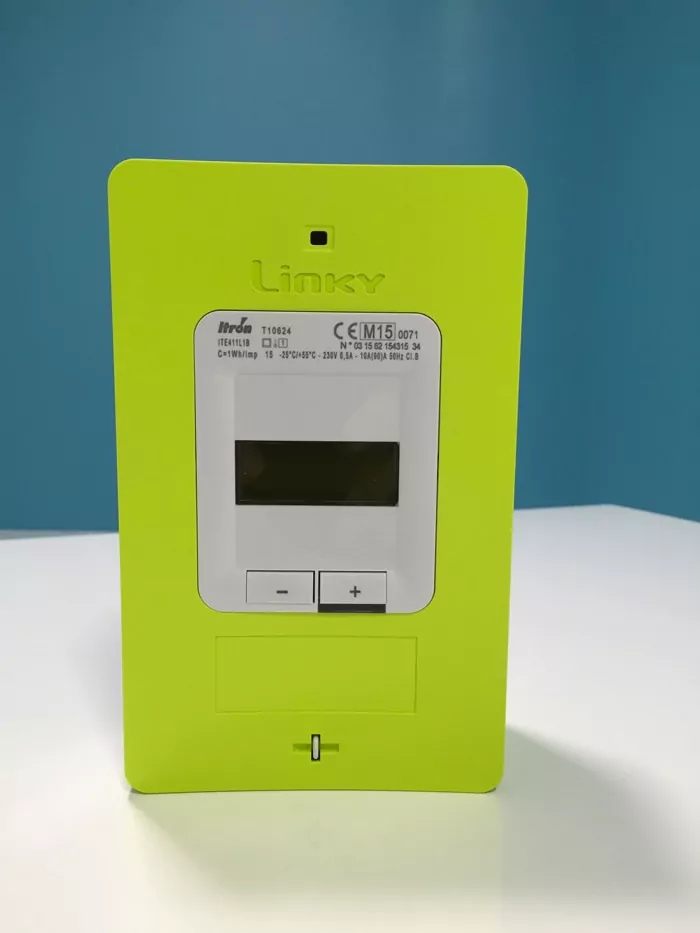
Charging an EV without a smart meter: what you lose, and how to measure and reimburse home charging
Yes, you can charge an EV without a smart meter. What you lose, smart meter coverage in 9 European countries and 3 ways to measure the car's kWh.