How much does it cost to charge an electric car at home in the UK? 2026 figures per charge and per mile
Full charge at home in the UK: about £4 to £6 on a smart EV tariff, £17 to £23 on the price cap. Cost by model, per mile, per month and versus petrol.
Aubin Aycaguer, Chief of Staff, Voltaback3 Nov 2026

Charging an electric car at home in the UK costs about £4 to £6 for a full charge on a smart EV tariff and about £17 to £23 on the Ofgem price cap (26.32p per kWh, October to December 2026), depending on battery size. Per mile, that is roughly 2p off-peak and 8p on the cap, against about 17 to 18p for a petrol car.
For 1,000 miles a month, budget around £20 if you charge entirely off-peak and around £80 on a standard tariff. A company car driver should not pay any of it: the employer can repay the whole amount, tax free.
This guide gives the formula, a table by popular UK model, the monthly and yearly cost, the comparison with public charging and petrol, the effect of the current VAT holiday on home electricity, and what it means for company car drivers.
The essentials in 30 seconds
- Formula: battery kWh × price per kWh, plus about 10 % for charging losses.
- Full charge, smart tariff at 6.5p: about £4.20 (VW ID.3) to £5.80 (BMW i4).
- Full charge, price cap at 26.32p: about £17 to £23.
- Per mile at home: about 2p off-peak, 8p on the cap; rapid public charging about 22p.
- VAT: domestic electricity is zero-rated in Great Britain until 31 March 2027, then 5 %.
How to calculate the cost of charging at home
The calculation needs three numbers: how much energy goes into the battery, how much the home supply delivers to get it there, and your price per kWh.
Cost of a charge = kWh added to the battery × 1.10 (losses) × your price per kWh
- kWh added. A full charge from empty is the usable battery capacity. In real life you rarely start at zero: from 20 % to 80 % is 60 % of the battery.
- Losses. Around 10 % of the energy is lost as heat in the charger, the cable and the car's on-board charger. More on a slow 3-pin charge and in winter.
- Price per kWh. The unit rate on your tariff at the time of charging. Leave the standing charge out: you pay it whether or not you own an EV.
Example: a Kia EV3 Long Range charged from 20 % to 80 % adds about 47 kWh to the battery. The home supply delivers about 51 kWh. At 6.5p, that is about £3.35; at 26.32p, about £13.55.
Cost of a full charge by model
The table uses usable battery capacity (rounded), 10 % losses, the price cap unit rate of 26.32p/kWh, and a smart EV tariff at 6.5p/kWh. Battery sizes are approximate and vary with the version; check your own car's figure.
Model | Usable battery (about) | kWh from the socket | Full charge at 26.32p (price cap) | Full charge at 6.5p (smart EV tariff) | 10 % to 80 % at a rapid charger (79p) |
|---|---|---|---|---|---|
VW ID.3 Pro | 59 kWh | 65 kWh | £17.10 | £4.20 | £32.60 |
MG4 Long Range | 62 kWh | 68 kWh | £18.00 | £4.40 | £34.30 |
Tesla Model Y Long Range | 75 kWh | 83 kWh | £21.70 | £5.40 | £41.50 |
Skoda Elroq 85 | 77 kWh | 85 kWh | £22.30 | £5.50 | £42.60 |
Kia EV3 Long Range | 78 kWh | 86 kWh | £22.60 | £5.60 | £43.10 |
BMW i4 eDrive40 | 81 kWh | 89 kWh | £23.50 | £5.80 | £44.80 |
Battery capacity source for the Kia EV3: EV Database; price cap: Ofgem; rapid price: Zapmap.
The last column is the point of comparison most drivers miss. Charging 70 % of the battery at a rapid charger costs about eight times more than a full charge at home off-peak, for less energy.
Cost per mile: home, public and petrol
Cost per mile depends on efficiency as much as on price. HMRC uses 3.59 miles per kWh as its reference for company electric cars; a large car in winter can drop below 3.
Energy source | Price | Cost per mile (3.59 miles/kWh, losses included at home) |
|---|---|---|
Home, smart EV tariff | 6.5p/kWh | about 2.0p |
Home, fixed-window EV tariff | about 9.5p/kWh | about 2.9p |
Home, price cap | 26.32p/kWh | about 8.1p |
Public slow and fast | 54p/kWh | about 15.0p |
Public rapid and ultra-rapid | 79p/kWh | about 22.0p |
Petrol, 45 mpg | about 174p per litre | about 17.6p |
Petrol, 50 mpg | about 174p per litre | about 15.8p |
Home charging on the price cap costs about half of a frugal petrol car per mile; home charging off-peak, about a ninth. Relying on rapid chargers wipes out the advantage.
Petrol cost per mile uses 4.546 litres per gallon. For the full breakdown of prices by charging place, see our guide to the cost of EV charging per kWh.
Official range versus real range
WLTP figures are measured in a laboratory. In real UK driving, expect less: motorway speeds, cold mornings and cabin heating can cut efficiency by 20 % or more in winter. A car rated at 4 miles per kWh may average 3.5 over a year and drop towards 3 in January. Budget with a realistic figure, not the brochure one.
What it costs per month and per year
Monthly budget for 1,000 miles
At 3.59 miles per kWh, 1,000 miles needs about 279 kWh in the battery, so about 306 kWh from the home supply.
How you charge | Monthly cost for 1,000 miles | Yearly (12,000 miles) |
|---|---|---|
100 % smart EV tariff at 6.5p | about £20 | about £240 |
80 % off-peak at 6.5p, 20 % at the cap rate | about £32 | about £385 |
100 % price cap at 26.32p | about £81 | about £970 |
Price cap after VAT returns to 5 % (27.64p) | about £85 | about £1,015 |
100 % rapid public at 79p | about £220 | about £2,640 |
Three driver profiles
Profile | Miles per week | kWh from the socket per week | Weekly cost, smart tariff | Weekly cost, price cap |
|---|---|---|---|---|
Local commuter | 100 | about 31 | about £2 | about £8 |
Hybrid worker with weekend trips | 200 | about 61 | about £4 | about £16 |
Field sales driver | 500 | about 153 | about £10 | about £40 |
The field sales driver is the one for whom the tariff, the charger and the reimbursement method matter most: on the price cap, the electricity costs around £2,000 a year, and on a smart tariff about £500.
Economy 7 and older two-rate meters
Some homes still have an Economy 7 meter with seven cheaper night hours. The night rate varies by supplier and region, and is usually well above the best smart EV tariffs but below the standard rate. If you charge overnight on Economy 7, use the night unit rate on your bill in the calculation above.
How much does it add to your electricity bill?
Exactly the kWh the car takes, at your unit rate: the standing charge does not change. A driver covering 8,000 miles a year adds about 2,450 kWh to the household's consumption. For a typical home using around 2,700 kWh a year before the car, that nearly doubles the electricity used, which is why the tariff matters so much.
Is it worth it? A year of driving, EV versus petrol
Take a driver covering 12,000 miles a year.
Petrol car, 45 mpg, 174p per litre | EV, home on price cap | EV, 80 % off-peak + 20 % cap rate | EV, 90 % home off-peak + 10 % rapid | |
|---|---|---|---|---|
Energy per year | about 1,215 litres | about 3,680 kWh | about 3,680 kWh | about 3,310 kWh at home, 330 kWh rapid |
Annual energy cost | about £2,110 | about £970 | about £385 | about £480 |
Saving versus petrol | n/a | about £1,140 | about £1,725 | about £1,630 |
The saving from home charging covers the cost of a wallbox in well under a year for most drivers. Even on the standard price cap, an EV charged at home costs less than half the fuel of an efficient petrol car.
Charging a plug-in hybrid at home
Plug-in hybrids have smaller batteries, usually 10 to 25 kWh, so a full charge costs less: about 70p to £1.80 on a smart tariff and £2.90 to £7.20 on the price cap, losses included. The electric range is short, typically 25 to 60 miles, so the saving depends entirely on plugging in every day.
A PHEV that is rarely charged runs on petrol, carrying the weight of a battery it does not use. For company PHEVs, measuring home charging also shows the employer which cars are actually plugged in.
Do you need a smart meter to know the cost?
Not to charge, but it helps. A smart meter records consumption by half hour, which time-of-use and EV tariffs need. Without one, you can still calculate the cost from the car's or the charger's app (kWh per session) and your unit rate. If your home has no smart meter, our guides on charging a company car at home explain the options.
Home, work or public: where the miles come from
Most UK EV drivers with off-street parking do the bulk of their charging at home, overnight. The others mix workplace, destination and rapid chargers.
- At home: the cheapest per kWh, especially off-peak, and the most convenient.
- At work: often free to the driver, and not a taxable benefit for company car drivers or for employees' own cars.
- Public slow and fast: 54p/kWh on average, useful as a destination top-up.
- Public rapid: 79p/kWh on average, essential on long trips, expensive as a habit.
Drivers who cannot charge at home pay three to ten times more per mile. For them, a workplace charger, or a 3-pin or dedicated socket where possible, changes the economics completely. Our guide to how long it takes to charge an electric car shows what each power level delivers overnight.
The VAT holiday on home electricity
Domestic electricity in Great Britain is zero-rated for VAT from 1 October 2026 to 31 March 2027. It returns to 5 % from 1 April 2027. Northern Ireland stays at 5 %. Source: gov.uk, temporary zero rate of VAT for domestic electricity.
For an EV driver, the effect is about 1.3p per kWh on the price cap, or roughly £4 a month at 1,000 miles. Public charging keeps its 20 % VAT, so the home-versus-public gap is at its widest this winter.
How to pay less for each home charge
- Choose an EV tariff with an overnight cheap window, and check it fits your car or charger.
- Schedule every charge inside that window from the car's app or the charger.
- Charge to 80 % day to day. Keep 100 % for long trips.
- Pre-heat while plugged in on cold mornings, so the energy comes from the grid, not from the battery.
- Keep tyres at the right pressure and avoid roof boxes when not needed: efficiency is free money.
- Use free workplace charging when it is available.
For setting up timed charging and comparing windows, read our guide to off-peak charging.
Company car drivers: you should not be paying for this
If you drive a company electric car, your employer can repay all the electricity you use to charge it at home, private miles included, with no income tax and no National Insurance. HMRC treats the reimbursement as exempt under s.239 ITEPA 2003, as long as it covers only the company car and not the rest of your household. Source: HMRC, EIM23900.
Many employers instead pay HMRC's Advisory Electricity Rate of 7p per business mile for home charging. That works well for a driver on an off-peak tariff, but a driver on the price cap pays about 8p per mile once losses are counted, and private miles are not covered at all.
What it costs the employer
For a company car covering 15,000 miles a year:
Driver's tariff | Annual home charging cost, repaid in full |
|---|---|
Smart EV tariff, all off-peak | about £300 |
80 % off-peak, 20 % at the cap rate | about £480 |
Price cap, all charges | about £1,210 |
That is a small budget line next to the lease and far below the cost of a fuel card for a petrol car. The difficulty is not the amount, it is the data: knowing how many kWh each car took, at what price.
Voltaback measures each charge from the car, values it at the driver's own tariff, and produces a monthly statement and a monthly export ready to import into your payroll software. On measurement, Voltaback relies on the home's MID-certified meter, not on a standalone cable meter. The same driver guide explains what to ask your employer.
To estimate your fleet's budget, use our home charging cost simulator, and see how home charging reimbursement works.
Questions about the cost of charging an electric car at home
In the UK in late 2026, about £17 to £23 on the price cap (26.32p per kWh) for a 60 to 80 kWh battery, and about £4 to £6 on a smart EV tariff at 6.5p per kWh. Those figures include around 10 % of charging losses.
For 1,000 miles a month, about £20 if all charging is off-peak on a smart tariff, around £32 with 20 % at the standard rate, and about £81 on the price cap. Relying on rapid public chargers would cost around £220.
Yes. On the price cap, home charging costs about 8p per mile against roughly 16 to 18p per mile for a petrol car at about 174p per litre. On an off-peak EV tariff, it is about 2p per mile.
The kWh the car uses, at your unit rate; the standing charge does not change. A driver covering 8,000 miles a year adds about 2,450 kWh, or around £160 on a smart tariff and £645 on the price cap.
A Tesla Model Y Long Range with about 75 kWh usable takes around 83 kWh from the socket for a full charge: about £21.70 on the price cap and about £5.40 on a smart EV tariff at 6.5p per kWh.
Not at the moment in Great Britain: domestic electricity is zero-rated from 1 October 2026 to 31 March 2027, then returns to 5 %. Northern Ireland stays at 5 %. Public charging carries 20 % VAT.
They can, in full and tax free, as long as the payment covers only the car's electricity. Many employers pay 7p per business mile instead, which leaves private miles and drivers on standard tariffs out of pocket.
Know the cost, then have it repaid
Home charging is the cheapest way to run an electric car, from about 2p per mile off-peak. For a company car, the right amount for the employer to repay is exactly what the car consumed, at the price the driver paid.
Talk to Voltaback to see how your drivers' home charging can be measured and repaid automatically, at each driver's real cost.
Recommended articles
Driver
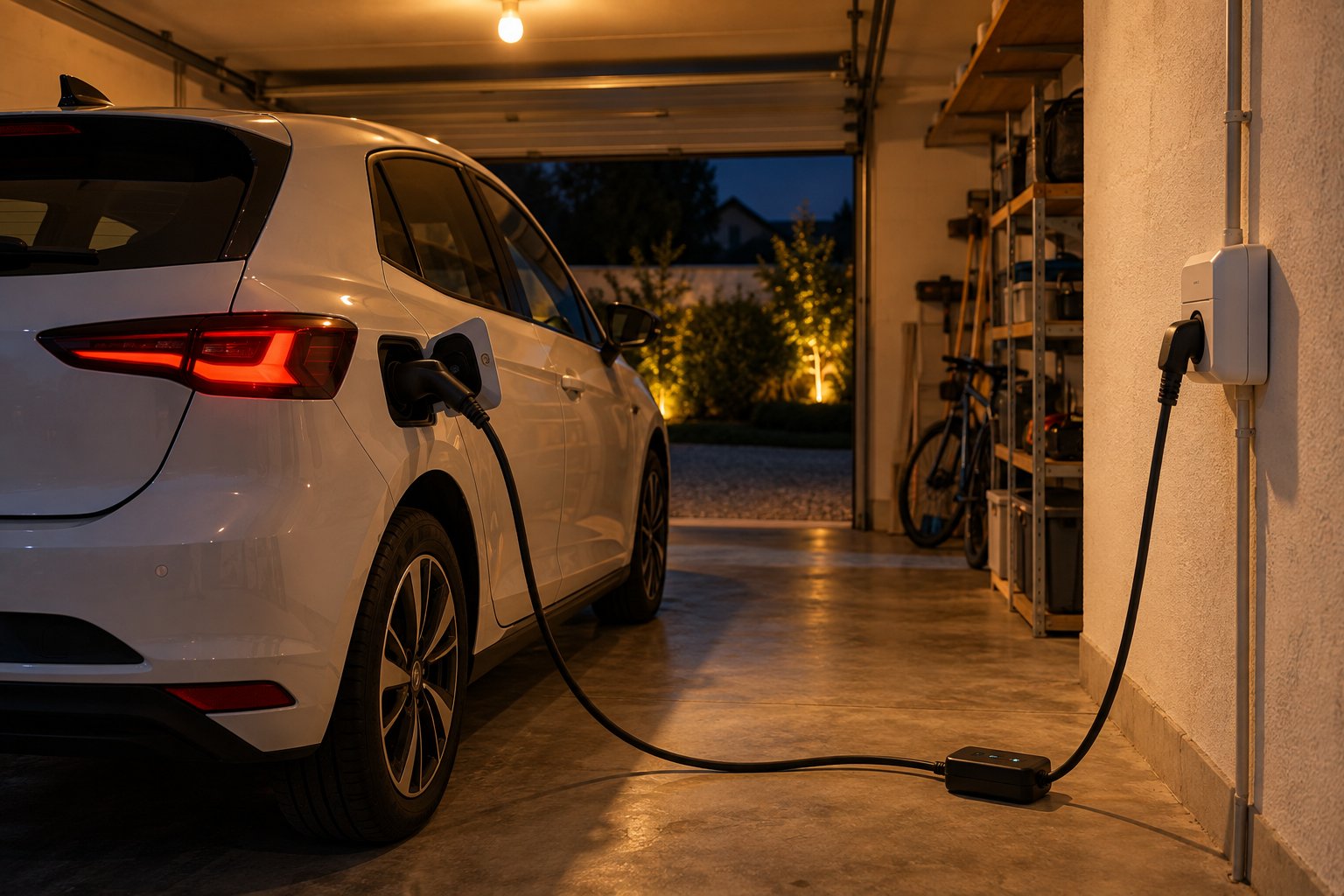
How long does it take to charge an electric car? UK times by charger, and miles added overnight
How long to charge an electric car in the UK: 3-pin plug, 7 kW home charger, 22 kW and rapid. Tables by battery, miles per hour and miles added overnight.
Driver
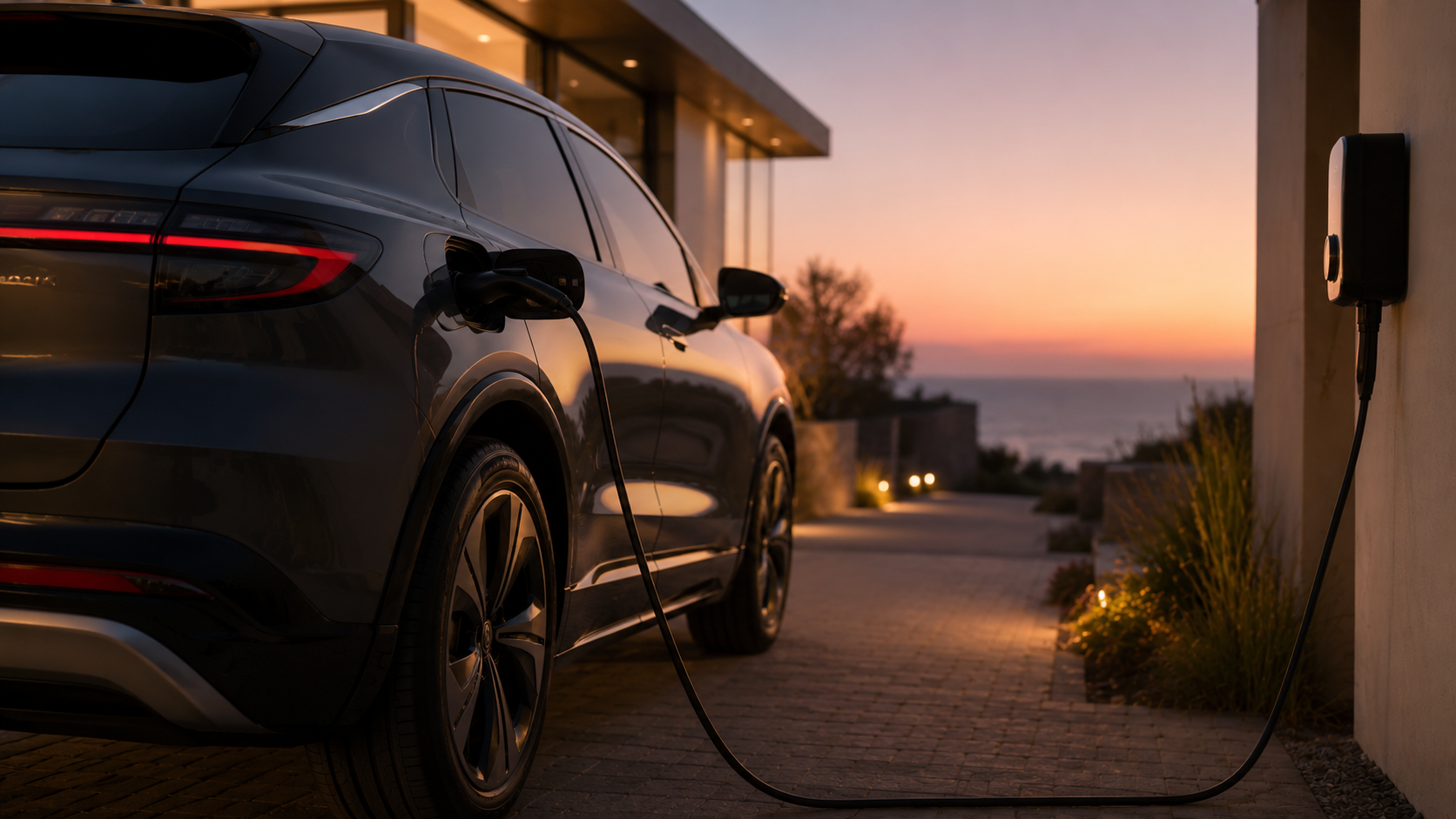
EV tariffs explained: off-peak charging windows, prices and how employers should reimburse them
Economy 7, fixed EV tariffs, smart and Agile tariffs compared, with windows, prices and savings, and how employers should repay off-peak charging.
Driver
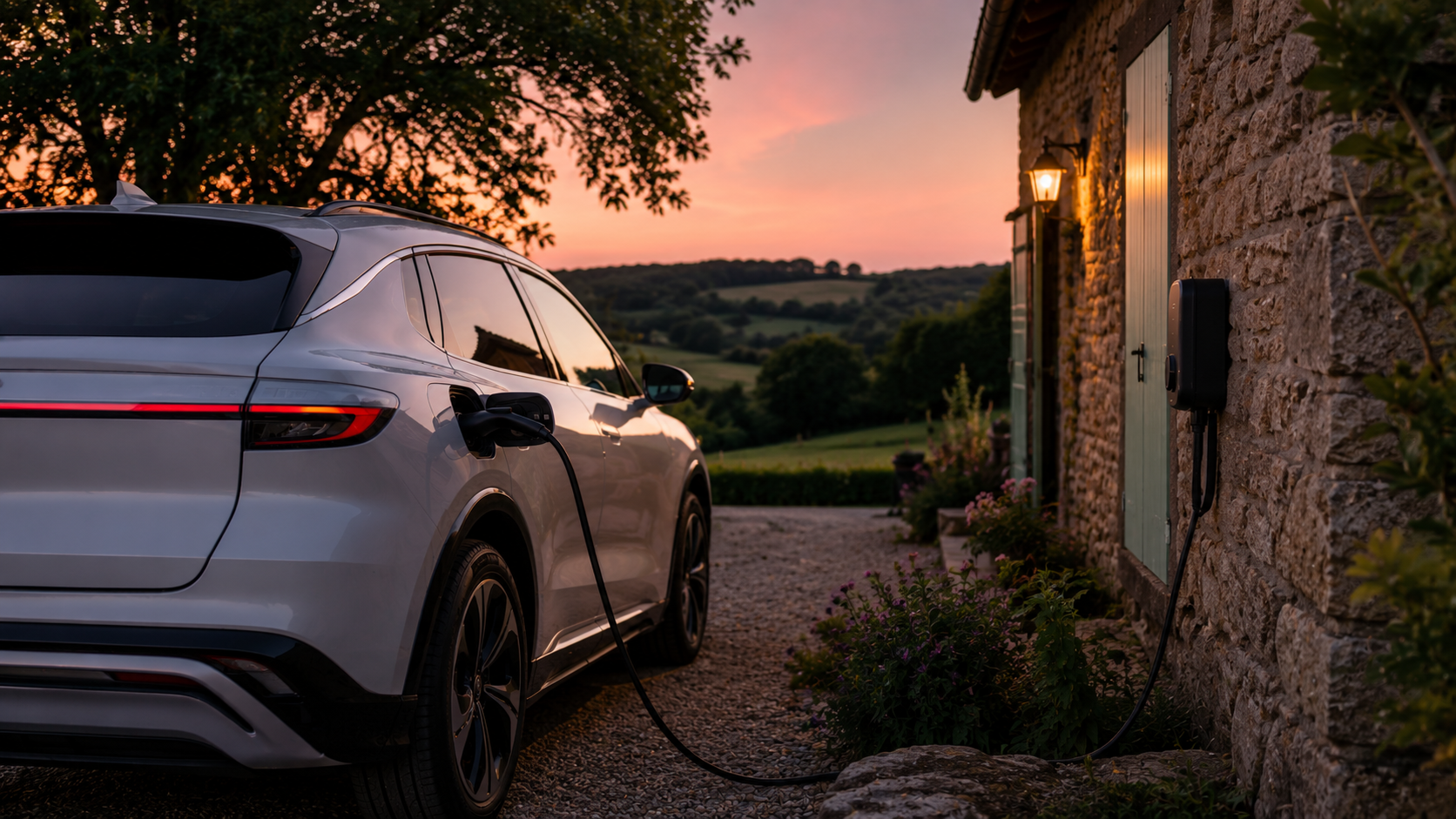
Charging an electric car at home in the UK: 3-pin plug or wallbox, and how to set it up
3-pin plug, commando socket or 7 kW wallbox? Miles per hour, fuse size, costs, grants, installer rules and EV tariffs for charging an EV at home in the UK.